
Description
Key Benefits
- Supports BDNF (Brain-derived Neurotrophic Factor)
- Supports brain function, memory, and focus
- Supports neuroplasticity
- Helps reduce brain fog and mental fatigue
- Supports immune modulation linked to cognitive health
- Supports Brain repair
- Supports Mitochondrial Health
- Supports stress adaptation and nervous system balance
- Promotes long-term brain and neurological health
Key Ingredients
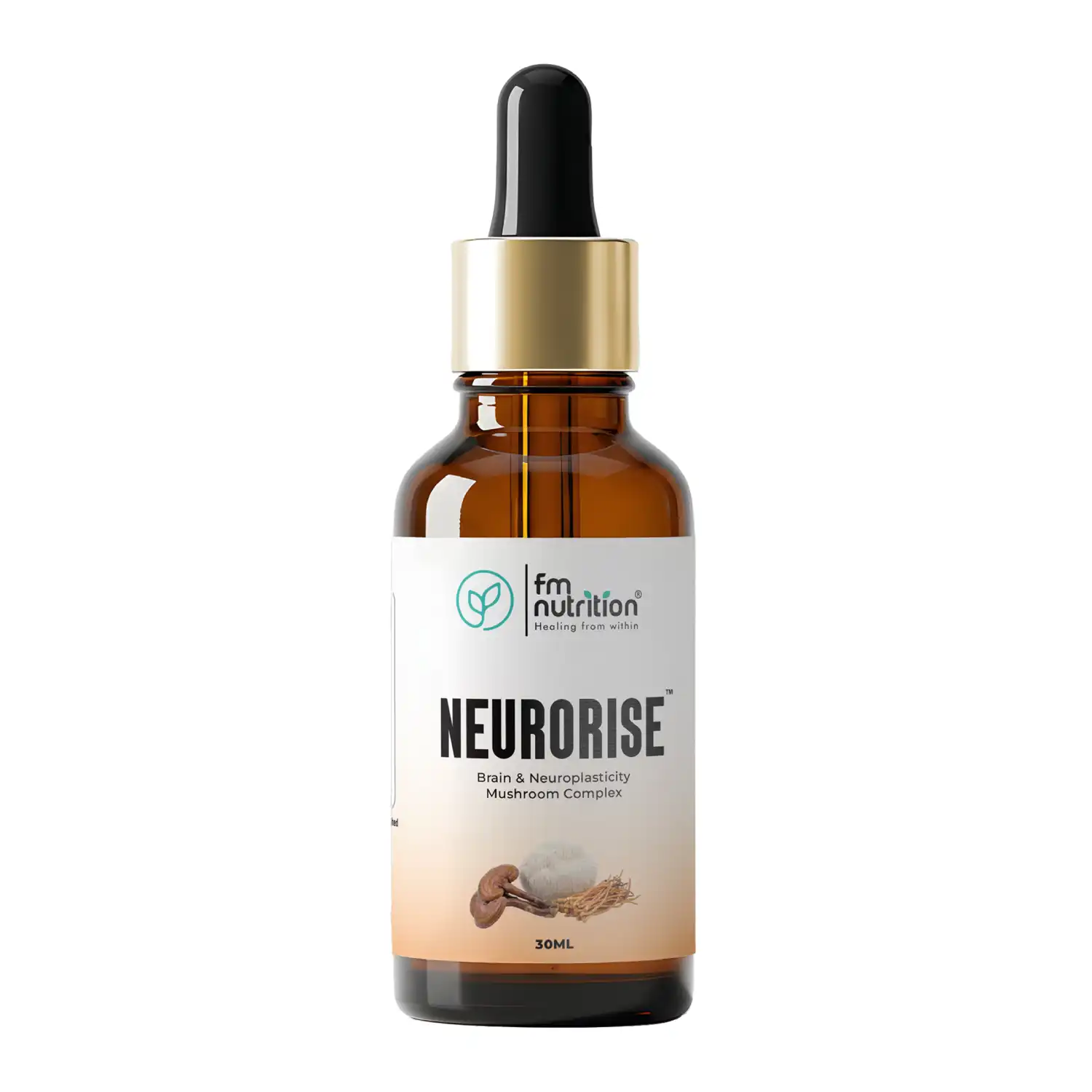
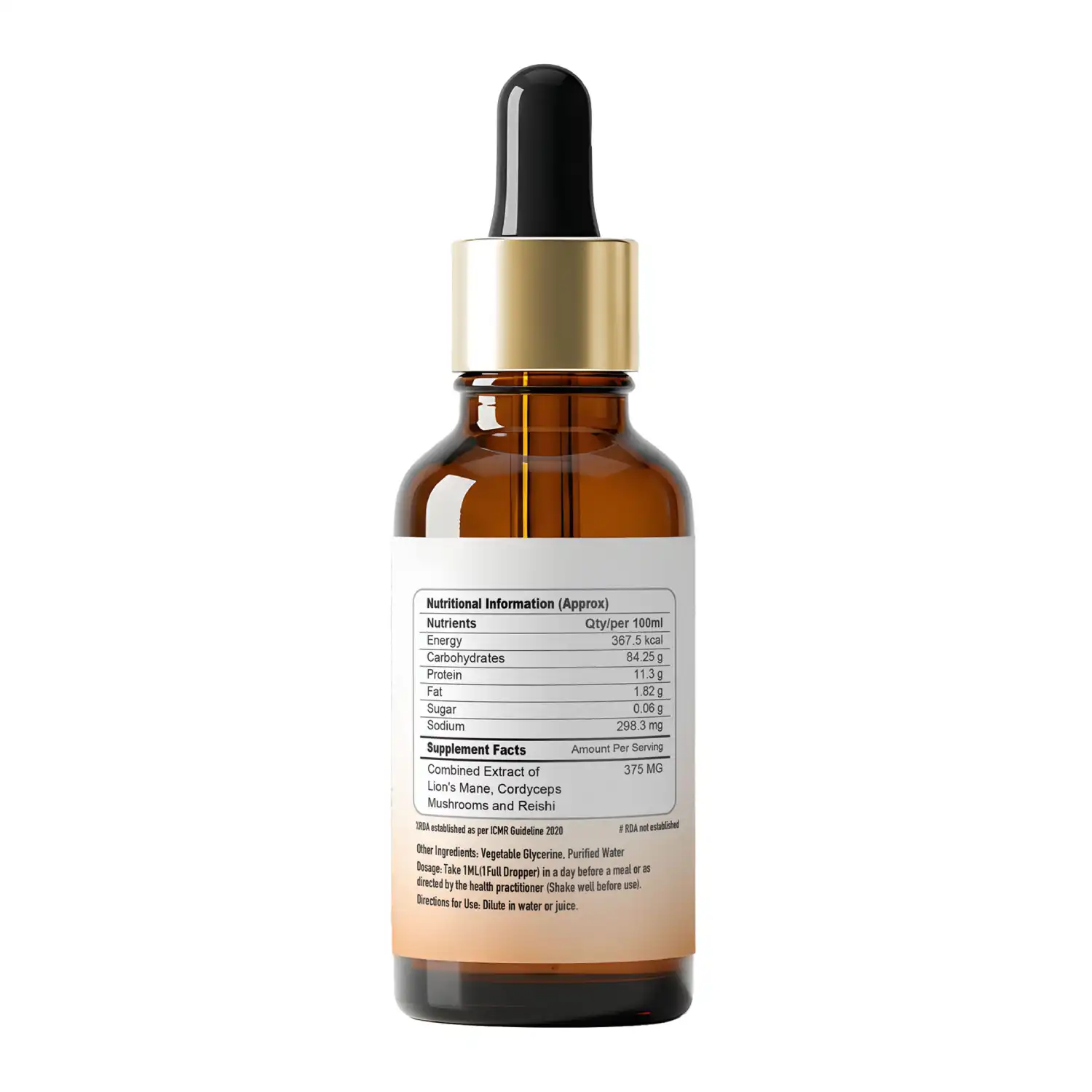
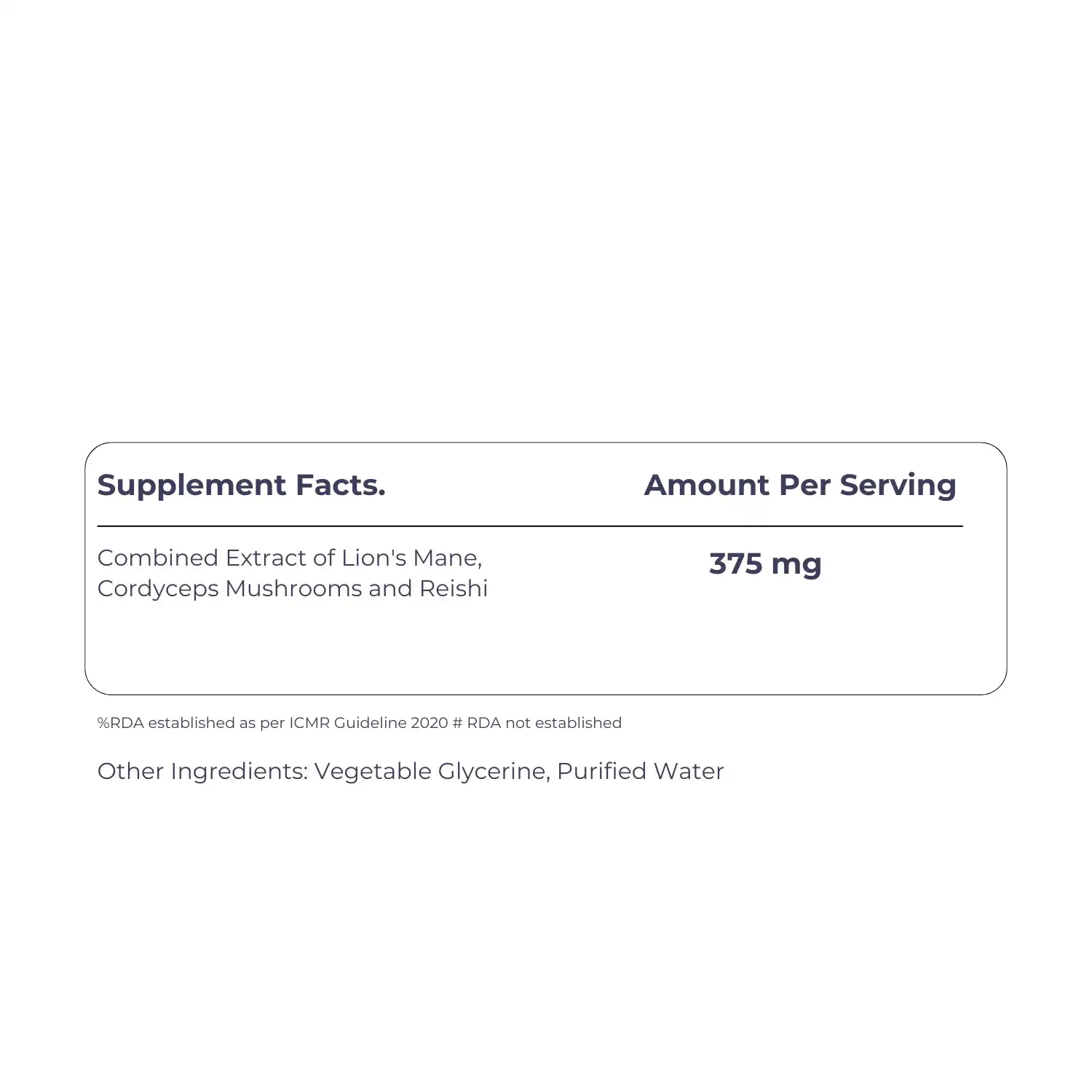
- Combined extract of Lion’s Mane (Hericium erinaceus), Cordyceps Mushrooms (Cordyceps sinensis), and Reishi (Ganoderma lucidum)- 375mg
Key Indications
- Brain fog, poor concentration, or memory lapses
- High mental workload or cognitive stress
- Fatigue, burnout, or low mental stamina
- Age-related cognitive decline prevention
- Individuals seeking neuroprotective and adaptogenic support
Recommended Dosage
Take 1 ml (Full dropper) in a day before a meal or as recommended by your healthcare practitioner.
Why Choose This Product?
- Clinically relevant medicinal mushroom combination
- Supports both cognitive performance and neural resilience
- Liquid format for better absorption and compliance
- Adaptogenic, non-sedative brain support
- Suitable for long-term brain health protocols
FAQs
Yes. Neurorise is designed for daily and long-term cognitive support.
No. Neurorise supports calm focus without sedation.
Yes, it is suitable for age-related cognitive support when used as directed.
Neurorise focuses on neuroplasticity and brain resilience using medicinal mushrooms rather than stimulants,
- Szućko-Kociuba I, Trzeciak-Ryczek A, Kupnicka P, Chlubek D. Neurotrophic and Neuroprotective Effects of Hericium erinaceus. Int J Mol Sci. 2023;24(21):15960. Published 2023 Nov 3. doi:10.3390/ijms242115960
10.3390/ijms242115960 - Das G, Shin HS, Leyva-Gómez G, et al. Cordyceps spp.: A Review on Its Immune-Stimulatory and Other Biological Potentials. Front Pharmacol. 2021;11:602364. Published 2021 Feb 8. doi:10.3389/fphar.2020.602364
- Guggenheim AG, Wright KM, Zwickey HL. Immune Modulation From Five Major Mushrooms: Application to Integrative Oncology. Integr Med (Encinitas). 2014;13(1):32-44.